
Cross-cultural betting patterns: how regional customs shape expert forecasts for distant equestrian circuits, overseas soccer leagues, and international racket events
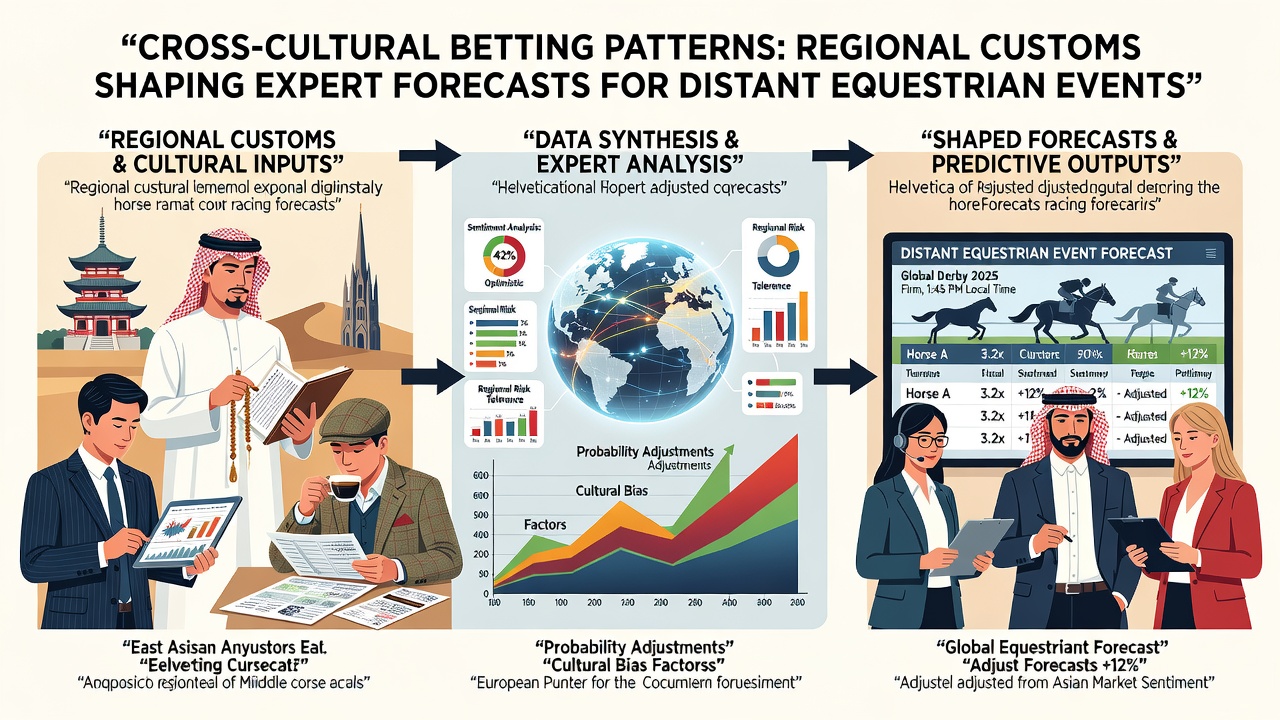
Regional customs influence how forecasters approach wagers on horse racing circuits in distant countries, soccer leagues operating under different cultural norms, and tennis tournaments held across continents. Observers note that betting patterns shift when experts incorporate local traditions, historical attendance data, and social preferences that affect participant motivation and crowd support in each market.
Data from international racing federations shows Japanese punters favor long-shot selections in flat races because of cultural emphasis on endurance stories, whereas Australian markets lean toward speed-based handicaps tied to outback heritage events. These differences require forecasters to adjust models when projecting outcomes for circuits thousands of miles away.
Equestrian circuits and inherited traditions
European racing calendars carry centuries-old festival customs that shape how experts weigh trainer records and track conditions. In contrast, South American circuits embed community betting rituals around major carnivals, which alter liquidity and odds movement in ways that distant analysts must account for through archived result sets.
August 2026 brings several key meetings in both hemispheres where these patterns intersect. Forecasters cross-reference weather archives with cultural event calendars to refine projections on fields where local jockeys hold documented advantages at specific tracks.
Soccer leagues operating under varied social frameworks
Overseas soccer markets reveal distinct patterns tied to regional fan rituals and league scheduling customs. South American domestic leagues often feature extended mid-season breaks aligned with national holidays, which data indicates affects squad rotation strategies and goal-scoring averages compared to continuous European campaigns.
Experts adjust forecasts by studying how crowd behavior in Asia influences referee decisions during evening fixtures, while African league patterns show higher draw rates linked to conservative tactical approaches rooted in community coaching traditions. These elements combine into layered models that account for time-zone effects and fixture congestion without relying on uniform assumptions.
International racket events and cultural performance cues
Tennis tournaments held in different regions demonstrate how surface preferences and scheduling customs affect serve statistics and match durations. North American hard-court events emphasize power baselines, whereas European clay circuits reward longer rallies shaped by historical training methods passed through local academies.
Asian swing tournaments in late summer incorporate humidity factors and recovery protocols that differ from standard Western models. Researchers at the University of Melbourne documented these variations in a 2025 study, noting that players from certain regions show measurable drops in second-serve accuracy when traveling across multiple time zones during August schedules.
Integrated forecasting approaches across markets
Professionals combine datasets from multiple continents to identify where regional customs create repeatable edges. One documented case involves cross-referencing Japanese racing form with South American soccer travel patterns to anticipate market overreactions during overlapping international windows.
Regulatory reports from the Australian Communications and Media Authority highlight how transparency requirements differ by jurisdiction, which in turn affects the availability of granular statistics that forecasters use when building region-specific adjustments.
Conclusion
Cross-cultural analysis continues to evolve as data collection expands across equestrian, soccer, and tennis markets. Forecasters who integrate local customs with statistical records produce projections that reflect the actual conditions encountered in each circuit, league, and tournament rather than applying standardized templates.