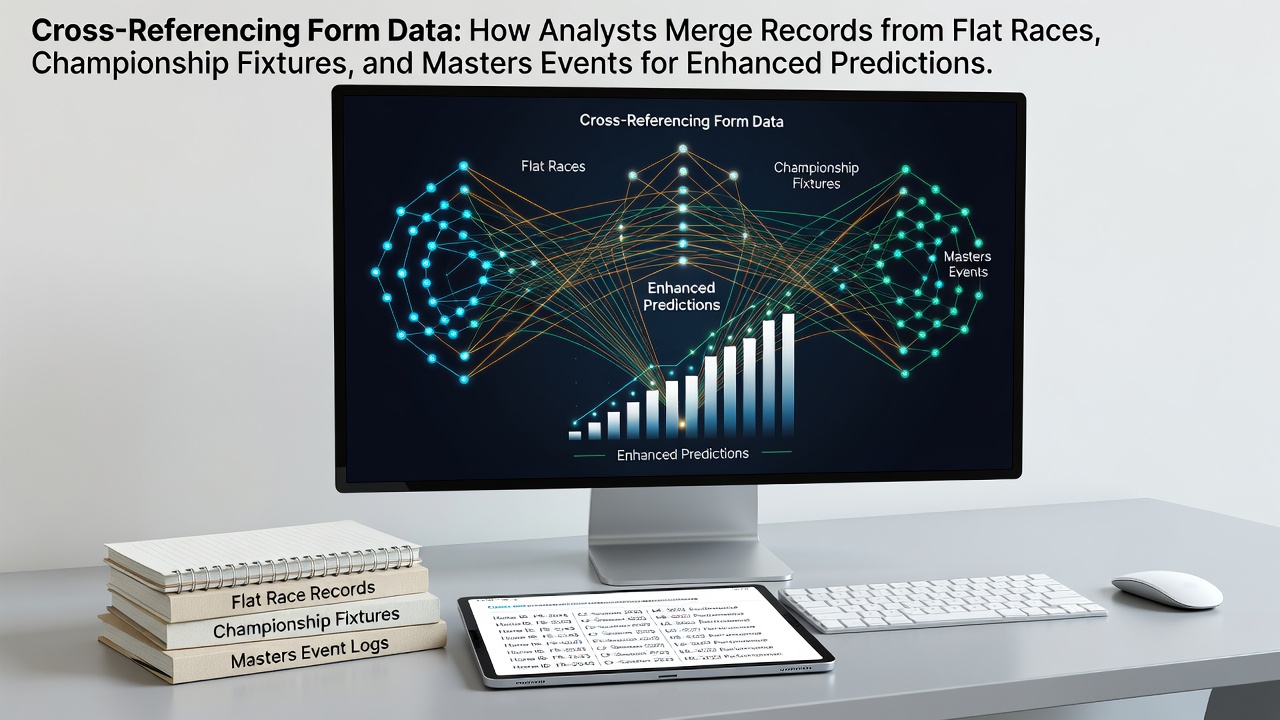
Cross-Referencing Form Data: How Analysts Merge Records from Flat Races, Championship Fixtures, and Masters Events for Enhanced Predictions
Analysts merge performance records across flat races, championship fixtures, and masters events by pulling structured datasets from timing systems, match logs, and tournament statistics into unified platforms that support comparative evaluation. This process begins with standardized data ingestion from sources such as official racing authorities, league databases, and tennis governing bodies, where variables including speed figures, goal differentials, and serve percentages receive consistent formatting before integration occurs.
Data Sources and Initial Collection
Flat race records supply metrics on finishing times adjusted for track conditions, horse weight carried, and sectional splits recorded at multiple points along the course. Championship fixtures contribute possession rates, pass completion percentages, and expected goal values derived from event tracking systems used across second-tier football leagues. Masters events add granular tennis data such as first-serve win rates, rally lengths, and surface-specific movement efficiency collected during ATP and WTA 1000 tournaments. Analysts align these inputs through common time stamps and participant identifiers so that a horse's recent sectional performance can sit alongside a midfielder's progressive pass count and a player's break-point conversion rate within the same query window.
Integration Techniques Employed by Analysts
Teams apply relational database joins and statistical normalization routines to reconcile differing scales across sports. Speed ratings from flat races undergo conversion into percentile ranks that match the distribution of football expected goals or tennis point-win probabilities. Machine learning models then identify correlations, such as how recovery intervals between races parallel fatigue patterns observed in back-to-back championship matches or consecutive masters rounds. September 2026 schedules illustrate this approach when analysts overlay data from late-summer flat meetings with early-season championship openers and the final masters events of the hard-court swing to test model robustness ahead of autumn competitions.

Applications in Predictive Modeling
Once merged, the combined datasets feed regression and classification algorithms that generate probability estimates for upcoming outcomes. Researchers at institutions including the MIT Sloan Sports Analytics Conference have documented how multi-sport feature sets improve accuracy when models account for pace adjustments across equine and human athletes. Analysts further refine outputs by layering contextual filters such as weather impacts on turf versus pitch conditions or court speeds that alter rally dynamics. These steps produce layered forecasts that incorporate both historical form and situational variables without relying on isolated sport-specific trends.
Validation and Ongoing Refinement
Validation occurs through back-testing against held-out seasons and live monitoring of prediction intervals during active campaigns. Data from the Australian Institute of Sport shows that cross-referenced models maintain calibration when analysts update coefficients after each new batch of results arrives from flat tracks, league grounds, and tournament courts. Periodic audits check for drift caused by rule changes or equipment modifications, prompting recalibration that preserves alignment across the three domains. Observers note that this iterative loop supports sustained model performance through varying competitive calendars.
Conclusion
Cross-referencing form data from flat races, championship fixtures, and masters events creates a consolidated analytical framework that analysts maintain through disciplined ingestion, normalization, and validation procedures. The resulting predictions draw on synchronized records that span equine timing, team event metrics, and individual match statistics, delivering outputs calibrated against observed results across multiple seasons and geographic regions.