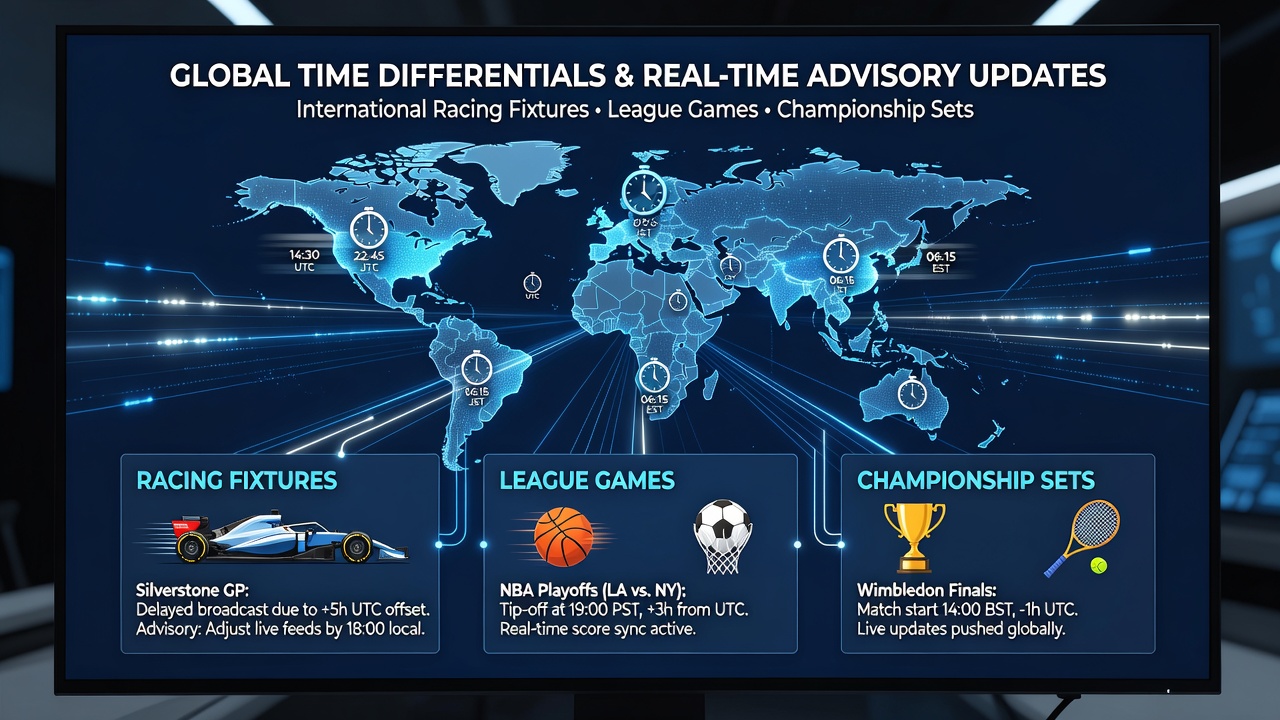
Global Time Differentials Shape Real-Time Advisory Updates for International Racing Fixtures, League Games, and Championship Sets
Global time differentials create constant coordination demands for real-time advisory services that cover horse racing, football leagues, and tennis championships across multiple continents, and these differences influence how quickly updates reach users who follow events in distant time zones. Observers note that services must synchronize data streams from venues operating under local clocks while delivering coherent information to audiences elsewhere, and this process relies on precise UTC references to avoid delays.
Core Mechanics of Time Zone Coordination in Sports Scheduling
Time zones divide the world into segments that span up to 24 hours, yet major sporting calendars place events at hours that suit local audiences while advisors elsewhere adjust their delivery windows accordingly. Data from the National Institute of Standards and Technology shows that atomic clock standards underpin global synchronization systems, and sports organizers apply these standards when publishing start times for races, matches, and sets. Services therefore convert venue local times into multiple target zones simultaneously, which allows subscribers in Asia to receive alerts about European fixtures without manual recalculation.
August 2026 brings the FIFA World Cup across North American venues that straddle several zones, and this spread requires advisory platforms to maintain parallel update channels for matches scheduled in Eastern, Central, and Pacific times. Coordinators handle these overlaps by anchoring all feeds to UTC, then layering local adjustments that reflect daylight saving shifts where applicable.
Effects on Horse Racing Fixtures Spanning Continents
Horse racing calendars feature meetings in Australia, Europe, and North America on the same calendar day, yet the local clock times differ dramatically and force advisory teams to sequence their releases carefully. A race card that begins at 11:00 a.m. in Sydney corresponds to late evening hours in London, so updates about track conditions or jockey changes must reach European followers before markets close, while Australian users still operate within their daytime window. Platforms therefore prioritize automated timestamp conversion that preserves accuracy across these offsets.
Observers record that services tracking Royal Ascot in June and the Melbourne Cup in November maintain dedicated pipelines that refresh every few minutes, and these pipelines account for the roughly nine-hour gap between the two locations. When weather data arrives from one venue, the system immediately recalculates relevance for users in other zones who may be placing wagers or following results overnight.
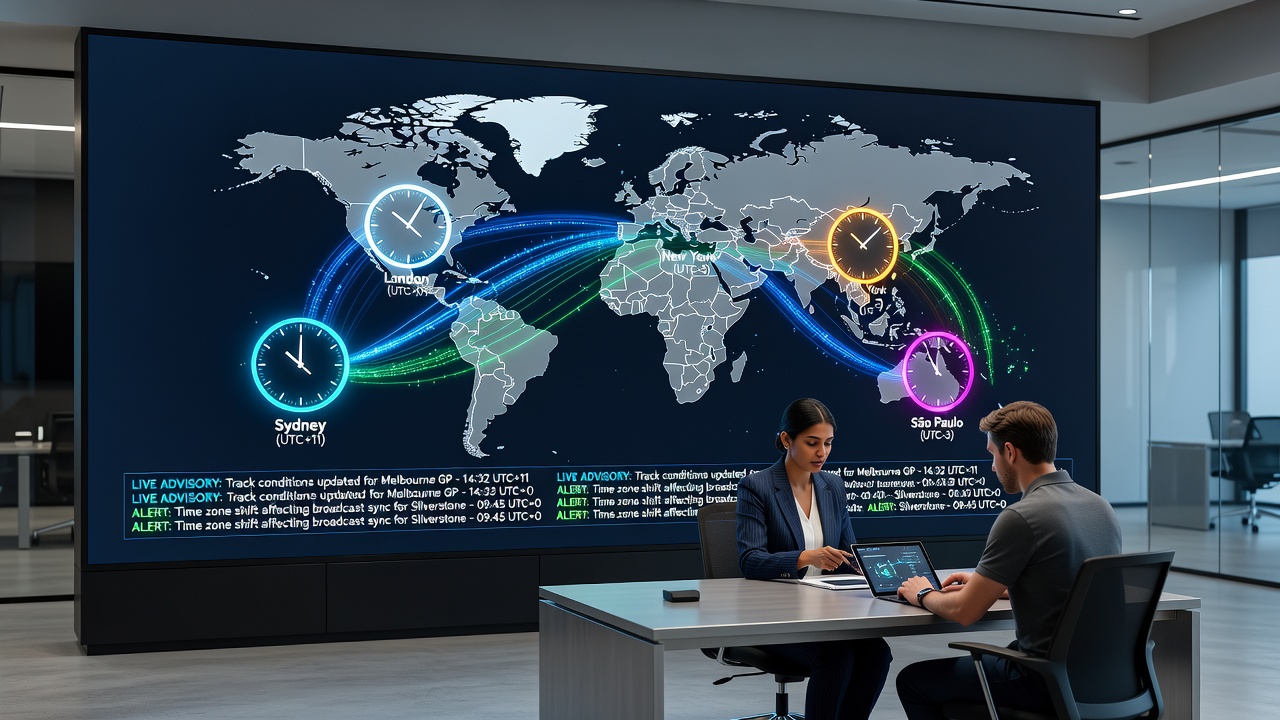
Adjustments Required for League Games Across Regions
Football leagues operate on schedules that place matches at times convenient for domestic television audiences, yet international followers encounter start times that fall during their working hours or sleep periods. Advisory updates about team lineups, injury reports, and tactical shifts must therefore arrive in advance of kickoff regardless of the recipient's location. Services achieve this by maintaining rolling queues that release information in staggered bursts timed to each major market zone.
According to the International Tennis Federation scheduling database, similar patterns appear in tennis tournaments where qualifying rounds begin early in one hemisphere while main draws continue into the evening elsewhere, and advisory teams track these transitions to keep users informed about court assignments and withdrawal notices. The same logic applies to basketball and rugby fixtures that cross the Atlantic or Pacific, where a single delay in one venue can ripple through multiple time-adjusted feeds.
Real-Time Demands in Championship Sets and Multi-Day Events
Championship events such as Grand Slam tennis tournaments and multi-stage cycling races extend across several days and multiple venues, each anchored to its own local time. Advisory services must therefore refresh data on serve statistics, set scores, and stage results while compensating for the offset between, for example, a morning session in Melbourne and an evening session in New York. Systems that fail to adjust timestamps correctly risk delivering outdated information to users who expect immediate context.
Research indicates that platforms handling these events employ layered verification steps that cross-check venue clocks against UTC before pushing alerts, and this approach reduces the chance that a late score update reaches one region after the next match has already started. Those who monitor these systems report that the volume of simultaneous events peaks during summer months when northern and southern hemisphere seasons overlap.
Technological Responses to Differential Challenges
Modern advisory infrastructure relies on API integrations that pull live data directly from official timing providers at each venue, then redistributes the information through zone-specific channels. This architecture supports rapid recalculation whenever daylight saving changes occur or when events run behind schedule. Services covering international calendars therefore test their conversion logic against historical offset tables to confirm consistency across all covered sports.
Industry reports highlight that organizations maintaining such systems invest in redundant clock sources to guard against single-point failures, and they publish transparent latency figures that demonstrate how quickly updates propagate from venue to end user across different regions. These figures help explain why certain services can deliver race results or match statistics within seconds of official confirmation regardless of geographic distance.
Conclusion
Global time differentials continue to shape the operational framework for real-time advisory updates that serve international audiences following horse racing, league games, and championship events. Services that master precise conversion and staggered delivery maintain relevance across zones, while those that overlook these factors encounter gaps in timeliness. As calendars expand to include events like the 2026 World Cup across varied North American clocks, the emphasis on accurate synchronization remains central to effective information flow.