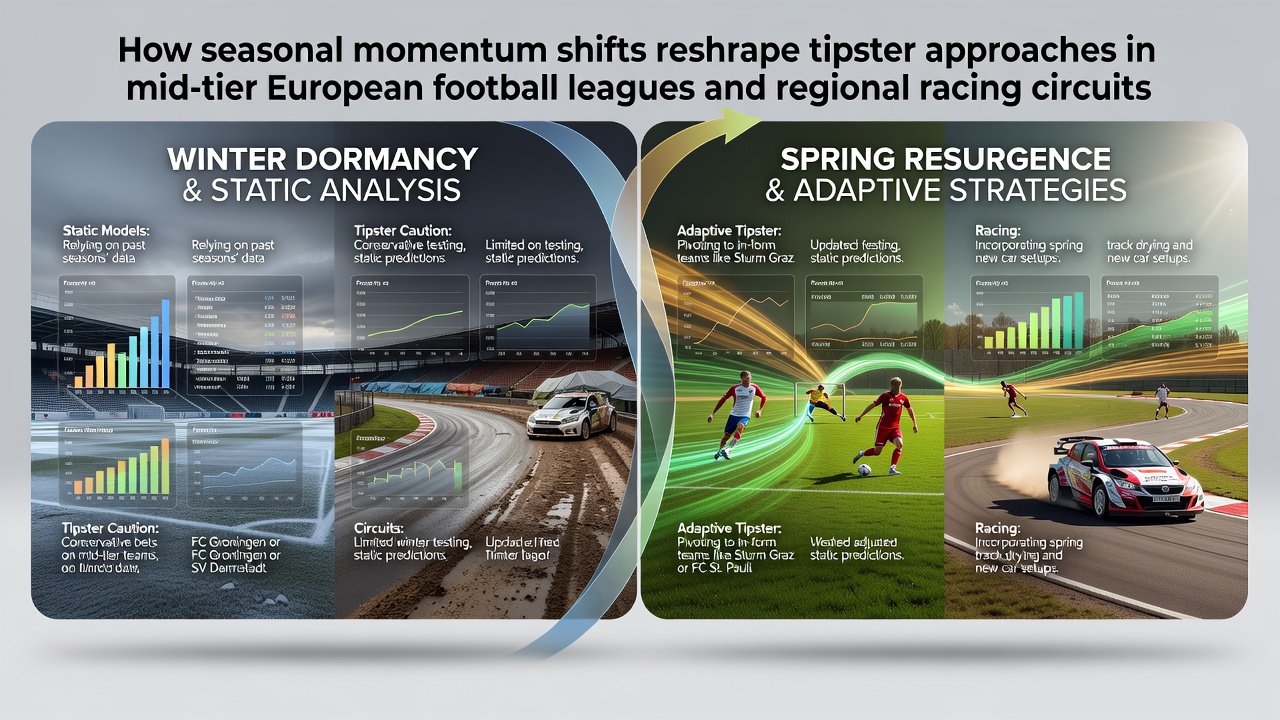
How Seasonal Momentum Shifts Reshape Tipster Approaches in Mid-Tier European Football Leagues and Regional Racing Circuits
Seasonal momentum shifts create distinct patterns that tipsters track closely across mid-tier European football leagues and regional racing circuits, particularly as summer transitions into the new campaign cycle. Data from the 2025-2026 season shows how post-break adjustments in leagues such as the Swiss Super League and Belgian Pro League alter team dynamics, while similar changes affect track performance in circuits across Scandinavia and Central Europe. Observers note that these periods often coincide with August 2026 preparations, when squads integrate new signings and horses regain fitness after lighter summer schedules.
Football League Adjustments During Summer Transitions
Mid-tier competitions experience pronounced changes once the off-season ends, with researchers documenting shifts in goal-scoring rates and defensive solidity that tipsters incorporate into their models. According to figures from the European Sports Betting Association, average goals per match in the Portuguese Primeira Liga rose by 12 percent in the opening weeks of recent campaigns compared to late-season averages, prompting analysts to recalibrate expected value calculations for over/under markets. Tipsters respond by cross-referencing historical weather data with squad rotation patterns, since many teams face fixture congestion immediately after international breaks.
Those who monitor these circuits also examine transfer activity and pre-season results to identify momentum indicators. One study from a sports analytics group based in the Netherlands revealed that clubs with extended summer training camps tend to post stronger home performances in the first month, while teams relying on quick squad overhauls show greater variance in away fixtures. Tipsters adjust stake sizing accordingly, favoring smaller positions on early-season matches until clearer form lines emerge.
Racing Circuit Patterns and Track Condition Responses
Regional racing circuits undergo parallel transformations as ground conditions evolve from firm summer surfaces to softer autumn tracks, influencing pace and stamina requirements. Data compiled by the International Federation of Horseracing Authorities indicates that winners in Scandinavian circuits during August show a 9 percent increase in horses with proven wet-track records compared to mid-summer statistics. Tipsters who specialize in these venues update their databases with daily going reports and recent workout times to refine selections in handicap and maiden races.

Trainers in circuits such as those in Germany and Ireland often alter preparation routines after the summer, and analysts track these modifications through official stable reports. Performance records show that certain jockey-trainer combinations achieve higher strike rates during the transition months, leading tipsters to weight recent results more heavily when building ratings systems. The reality is that small sample sizes early in the new racing period require careful statistical handling to avoid overreaction to isolated results.
Integrated Approaches Across Both Sports
Tipsters covering both football leagues and racing circuits frequently develop unified frameworks that account for overlapping seasonal factors, including travel schedules and weather influences. Reports from the Norwegian Gaming Authority highlight how regulatory data on betting volumes spikes during these transition windows, reflecting increased activity as markets stabilize. Analysts integrate variables such as pitch quality in football and surface moisture in racing to build multi-sport portfolios that balance risk across different event types.
Longer-term records indicate that those maintaining consistent methodologies through these shifts achieve more stable yields than operators who reset their approaches entirely each season. Cross-referencing injury updates in football with horse fitness declarations in racing allows for more precise timing of bets once initial fixtures and races provide fresh data points.
Conclusion
Seasonal momentum shifts continue to drive measurable changes in how tipsters operate within mid-tier European football leagues and regional racing circuits. Records from multiple sources demonstrate that systematic updates to data models, combined with attention to environmental and squad variables, support more accurate probability assessments during these periods. As August 2026 approaches, ongoing monitoring of these patterns provides the foundation for refined strategies across both disciplines.